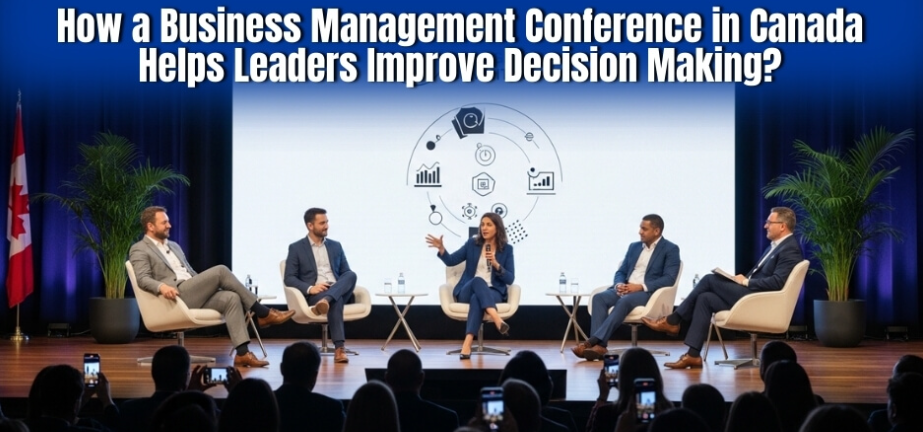
Leadership is more complex than ever these days. Markets shift quickly, technology evolves constantly, and competition grows stronger each year. In this fast-changing environment, many executives ask: How a business management conference in Canada helps leaders improve decision making? Understanding this connection can unlock new growth opportunities and sharper strategic thinking.
A business management conference in Canada helps leaders improve decision making by exposing them to expert insights, proven frameworks, practical case studies, and diverse professional perspectives. These experiences expand knowledge, reduce blind spots, and strengthen confidence in strategic choices. Just keep reading to discover how these conferences can transform leadership performance.
Leadership Decision-Making: Why Does It Matter in Modern Business?
Effective leadership decisions determine how organizations grow, compete, and innovate in dynamic markets. Understanding its importance helps leaders guide teams strategically. Let’s explore why decision-making matters in business.
- Strong leadership decisions help organizations allocate resources efficiently, ensuring time, capital, and talent support strategies that drive sustainable growth and operational success.
- Effective decision-making enables leaders to respond quickly to market changes, customer demands, and competitive threats while maintaining stability and organizational direction.
- Strategic decisions guide innovation and transformation by encouraging leaders to evaluate opportunities, adopt emerging technologies, and develop forward-thinking business strategies.
- Well-informed leadership choices improve employee confidence, as teams trust leaders who make clear, thoughtful decisions that align with company vision and goals.
- Data-driven decision-making helps businesses minimize risk, analyze performance trends, and develop strategies supported by reliable insights and measurable outcomes.
- Collaborative decision-making strengthens organizational culture by encouraging diverse perspectives, improving problem-solving quality, and creating balanced solutions to complex challenges.
How a Business Management Conference in Canada Helps Leaders Improve Decision Making?
Business management conferences help leaders improve decision-making by providing industry insights, strategic frameworks, expert case studies, and collaborative discussions. These experiences broaden perspectives, reduce blind spots, and help leaders evaluate risks and opportunities more effectively.
Key Ways Conferences Improve Leadership Decision-Making
- Exposure to diverse industry perspectives
- Structured decision-making frameworks
- Real-life leadership case studies
- Interactive workshops and simulations
- Peer discussions that challenge assumptions
- Access to emerging trends and data insights
Together, these elements create a learning environment where leaders refine their strategic thinking and develop stronger decision-making abilities.
Exposure to Diverse Industry Perspectives
One of the most valuable benefits of attending conferences is learning from leaders across industries. When professionals participate in a business management conference in Canada, they gain access to global insights, innovative strategies, and diverse leadership viewpoints.
Business events hosted in major Canadian cities often attract speakers, executives, and experts from different sectors and international markets. Their experiences help leaders understand how organizations in various industries approach complex challenges.
For example, a technology executive may learn strategic lessons from healthcare or finance leaders who have successfully managed regulatory changes, digital transformation, or rapid market shifts. These cross-industry perspectives expand strategic thinking, helping leaders analyze challenges from multiple angles and make more balanced, informed decisions.
Learning Structured Decision-Making Frameworks
Many conferences offer workshops or seminars focused on structured decision-making models. These frameworks help leaders analyze complex business problems in a systematic and logical way.
Common frameworks discussed include:
- strategic planning models
- risk assessment frameworks
- data-driven decision-making processes
- scenario planning techniques
Learning structured approaches enables leaders to evaluate multiple options carefully and make decisions based on analysis rather than intuition alone.
Real-Life Case Studies from Successful Leaders
Conference speakers often present real business challenges they have experienced within their organizations. These case studies help participants understand how successful leaders approach complex strategic decisions.
Attendees often learn:
- How leaders evaluated multiple strategic options
- Why were specific decisions chosen
- What outcomes resulted from those choices
These practical insights provide valuable lessons that leaders can apply directly within their own organizations.
Interactive Workshops That Simulate Business Challenges
Unlike traditional lectures, many conferences include interactive workshops where participants actively work through business scenarios.
During these sessions, leaders may:
- Analyze simulated business challenges
- Collaborate with other participants
- Evaluate risks and strategic outcomes
- Test different decision-making approaches
This hands-on learning environment strengthens analytical thinking and improves leaders’ confidence when handling complex business decisions.
Peer Discussions That Reveal Hidden Blind Spots
Leadership decisions can sometimes be limited by internal perspectives within an organization. Conferences create opportunities for informal discussions with professionals from different industries and backgrounds.
These conversations often reveal alternative viewpoints and challenge existing assumptions. As a result, leaders gain fresh insights that help them identify blind spots and refine their strategies.
Access to Data-Driven Insights and Emerging Trends
Modern business decisions require accurate information and awareness of industry trends. Business management conferences frequently feature presentations on:
- emerging technologies
- global economic trends
- market innovations
- evolving leadership strategies
Access to these insights allows leaders to anticipate changes in their industries and make forward-looking strategic decisions.
See also: Advanced Web Framework 907637483 for Businesses
Key Skills Leaders Develop at Business Management Conferences
Business management conferences help leaders strengthen essential skills required for effective decision-making. Through expert sessions, workshops, and peer discussions, leaders develop strategic, analytical, and collaborative capabilities that support better business outcomes.
Core Leadership Skills Developed at Conferences
| Skill | How Conferences Help Develop It |
| Strategic Thinking | Leaders learn to evaluate market trends and design long-term strategies that align with organizational goals. |
| Risk Assessment | Workshops and discussions teach leaders how to identify potential risks and evaluate possible outcomes before making major decisions. |
| Analytical Thinking | Conferences introduce tools and frameworks that help leaders interpret data and identify patterns in complex business environments. |
| Collaborative Decision-Making | Networking and group sessions encourage leaders to involve teams in problem-solving and strategic planning. |
Strategic Thinking and Long-Term Planning
Conference sessions often focus on strategic planning and future business growth. Leaders gain insights into how successful organizations adapt to changing markets and technological advancements.
These sessions help leaders:
- Understand long-term market shifts
- Develop growth-oriented strategies
- Align daily operations with broader organizational objectives
A strong strategic mindset allows leaders to make decisions that support sustainable business development.
Risk Assessment and Problem-Solving
Effective leaders must evaluate risks before implementing new initiatives. Conferences often include case studies and discussions that teach structured risk evaluation methods.
Leaders learn how to:
- Identify potential risks early
- Assess the consequences of different decisions
- Balance innovation with operational stability
Developing these skills helps organizations reduce uncertainty and avoid costly mistakes.
Analytical Thinking and Data Interpretation
Data-driven decision-making has become essential for modern organizations. Conferences introduce leaders to tools and methodologies that help them analyze complex information.
These insights enable leaders to:
- Recognize important data patterns
- Forecast future market trends
- Make decisions supported by reliable data
Strong analytical thinking allows leaders to evaluate options more accurately and choose effective strategies.
Collaborative Decision-Making with Teams
Modern leadership emphasizes collaboration rather than individual authority. Conferences highlight leadership models that encourage teamwork and shared problem-solving.
Through networking sessions and group discussions, leaders learn to:
- Gather diverse perspectives before making decisions
- Encourage team participation in strategic planning
- Build stronger alignment within organizations
Collaborative decision-making often results in more balanced and innovative business solutions.
Common Mistakes Leaders Make When Making Decisions (and How Conferences Help Avoid Them)
Leadership decisions shape business strategy, growth, and organizational performance. Yet many leaders struggle with common decision-making mistakes, such as limited perspectives or poor risk evaluation. Business conferences help leaders identify these challenges and develop smarter decision-making strategies.
Overreliance on Past Strategies
Many leaders rely heavily on strategies that worked in the past. While past success provides confidence, market conditions, technology, and customer expectations constantly evolve. Decisions based only on previous experience may overlook new opportunities or emerging risks.
How Conferences Help Avoid It
Business conferences expose leaders to new ideas, case studies, and innovative strategies from different industries. By learning how other organizations adapt to change, leaders develop flexible thinking and update their decision-making approaches.
Limited Perspectives in Leadership Teams
Leadership teams sometimes share similar professional backgrounds or viewpoints. This can create narrow perspectives and increase the risk of biased decisions. When leaders evaluate problems from only one angle, they may overlook better alternatives.
How Conferences Help Avoid It
Conferences bring together professionals from different sectors, regions, and business models. Through networking sessions and panel discussions, leaders gain diverse viewpoints that challenge assumptions and broaden their strategic thinking.
Ignoring Data and Market Insights
Some leaders make decisions based mainly on intuition or internal opinions rather than reliable data. Without analyzing market signals or performance metrics, organizations may take unnecessary risks.
How Conferences Help Avoid It
Many business conferences feature sessions on data-driven decision-making, analytics tools, and market research insights. These sessions help leaders understand how to interpret data and apply evidence-based strategies.
Delayed Decision-Making
Leaders sometimes delay important decisions due to uncertainty or fear of making the wrong choice. This hesitation can cause organizations to miss opportunities or lose a competitive advantage.
How Conferences Help Avoid It
Conference workshops and expert talks often present practical decision-making frameworks. These frameworks help leaders evaluate options quickly and make timely decisions with greater confidence.
Lack of Collaboration in Decision Processes
Some leaders make decisions independently without involving their teams. While quick decisions may seem efficient, they can reduce employee engagement and overlook valuable insights from team members.
How Conferences Help Avoid It
Leadership conferences emphasize collaborative decision-making models. Group discussions, workshops, and peer interactions demonstrate how involving teams leads to stronger, more balanced decisions.
Best Ways for Leaders to Choose the Right Business Management Conference in Canada
Choosing the right conference helps leaders gain meaningful insights, build valuable networks, and strengthen strategic thinking. Careful evaluation ensures the event delivers real professional value. Let us explore the best ways.

Key Factors Leaders Should Consider
- Relevant leadership and management topics
- Experienced industry speakers and executives
- Interactive learning opportunities
- Strong networking potential
- Industry specific insights and trends
- Conference reputation and attendee feedback
Evaluate the Conference Agenda and Learning Topics
Leaders should carefully examine the conference agenda before registering. A well-structured agenda that includes leadership strategy, decision-making frameworks, innovation trends, and business growth discussions provides valuable learning opportunities that support stronger strategic thinking.
Review the Expertise of Speakers and Industry Experts
The credibility of a conference often depends on the quality of its speakers. Leaders should prioritize conferences that feature experienced executives, researchers, and industry professionals who share practical knowledge and real-life leadership experiences.
Look for Interactive Sessions and Workshops
Conferences that include workshops, panel discussions, and collaborative sessions offer deeper learning experiences. These formats encourage leaders to analyze real business scenarios, discuss strategies with peers, and practice structured approaches to decision making.
Consider Networking Opportunities and Professional Connections
Networking opportunities allow leaders to exchange ideas with professionals from different industries and markets. Attending a business management conference in Canada often connects leaders with international experts, entrepreneurs, and executives who provide valuable strategic insights.
Assess Industry Relevance and Strategic Value
Leaders should select conferences that align with their industry and organizational goals. Events focused on relevant sectors provide insights into market trends, digital transformation, and leadership strategies that support more informed and confident decision-making.
Check Conference Reputation and Past Attendee Feedback
Reviewing previous attendee feedback helps leaders understand the quality and value of a conference. Positive testimonials, strong event reputation, and consistent participation from respected professionals often indicate a conference that delivers meaningful learning experiences.
Tips for Leaders to Assess the Real Impact of Conference Learning on Business Performance
Attending business conferences offers valuable leadership insights, but evaluating their real impact remains essential. Leaders must assess how conference learning influences strategic decisions and overall business performance. The following tips help leaders measure these outcomes effectively.
- Track Strategic Implementation Outcomes: Measure how newly learned strategies are applied within projects. Evaluate whether implemented ideas contribute to improved operational efficiency.
- Monitor Key Performance Indicators Changes: Compare performance metrics before and after conference participation. Identify measurable growth in revenue, productivity, or customer satisfaction.
- Gather Team Feedback on Applied Insights: Ask team members about changes in leadership approaches. Assess whether collaboration and decision quality have noticeably improved.
- Analyze Decision-Making Speed and Accuracy: Review how quickly strategic decisions are now finalized. Determine whether outcomes reflect stronger analysis and clearer direction.
- Evaluate Innovation and Problem-Solving Improvements: Observe whether teams propose more creative business solutions. Check if challenges are resolved using the structured methodologies learned.
- Assess Long-Term Business Growth Trends: Study revenue, market expansion, and competitive positioning data. Link sustained improvements to strategies gained during conference learning.
Concluding Lines
Leaders today face complex choices that shape growth, innovation, and long term success. Understanding how a business management conference in Canada helps leaders improve decision making? reveals the real value of these events. Through expert insights, practical case studies, structured frameworks, and peer discussions, leaders gain broader perspectives and stronger analytical skills. These experiences help them recognize risks, evaluate opportunities, and approach business challenges with greater confidence.
By choosing the right conference and applying what they learn, leaders can transform knowledge into measurable business results. Conferences support better strategic thinking, collaboration, and data-driven decision-making. When leaders actively measure the impact of conference learning, they strengthen both leadership capability and organizational performance.