Sydney doesn’t sit still. The land shifts from sandstone shelves to soft fill, from steep suburban cuts to harbour edges that feel like they’re still negotiating with the sea. You can design the neatest structure on paper, but once excavation starts, the city usually has a few opinions.
That’s why Shotcrete in Sydney has become less of a niche method and more of a quiet backbone. Not a headline act. More like the stage crew. The ones who show up early, adapt fast, and make sure the structure actually holds once real ground replaces digital lines.
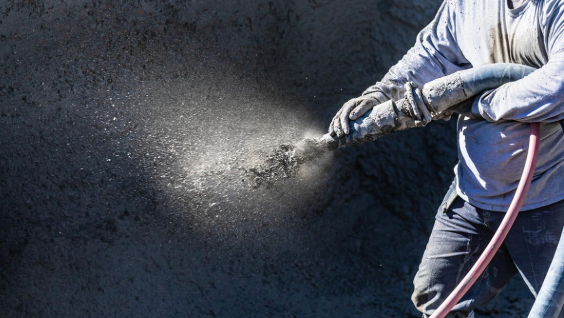
People often think of concrete as something you pour and walk away from. Shotcrete is different. It’s applied. Read. Adjusted. It’s closer to sculpting than pouring, closer to listening than telling.
And in this city, that makes sense.
The City Teaches You Fast, Or It Teaches You Hard
Anyone who’s worked construction in Sydney for more than five minutes has a story about the ground surprising them. A rock shelf where soil reports said clay. A void behind a heritage wall. Water finding its own path like it always does.
This is where Shotcrete in Sydney steps in as a service rather than a product. Contractors aren’t just supplying material. They’re responding in real time. Adjusting pressure, angles, mixes, reinforcement placement. Sometimes in centimetres. Sometimes in long afternoons where everything on the plan gets re-ordered.
It suits a city that’s grown layer by layer. Colonial brickwork over sandstone. Post-war extensions over old drains. New towers sitting beside terraces that were never meant to have neighbours taller than a fig tree.
Shotcrete works because it doesn’t demand perfect shapes. It adapts to them.
More Than Infrastructure. It Shows Up In Backyards Too.
There’s a habit of talking about shotcrete like it only belongs underground. Tunnels. Stations. Big civil jobs with high-vis and press releases.
But a lot of Shotcrete in Sydney happens quietly in places most people don’t associate with engineering. Residential cuttings in the Hills. Retaining walls behind terraces in Balmain. Pool structures on sloped blocks in the Northern Beaches. Basement stabilisation in the Inner West where every neighbouring wall feels like it’s holding its breath.
Service-based shotcrete contractors spend as much time talking with homeowners as they do engineers. Explaining what’s happening behind temporary mesh. Why drainage matters. Why curing time matters. Why sometimes the wall has to look rough before it can ever look finished.
Those conversations are part of the service. Not an extra.
Why Planners Keep Choosing It When Things Get Awkward
Sydney builds where it can. Not always where it’s easy.
Steep access, heritage constraints, narrow lots, coastal exposure, existing services running everywhere like veins. Traditional formwork often needs space. Shotcrete needs access and skill.
That’s why Shotcrete in Sydney has become the go-to solution when geometry stops behaving. Curved retaining walls. Irregular excavations. Rock faces that crumble instead of cutting clean. Spaces where you can’t install bulky moulds without dismantling half the street.
From a planning perspective, shotcrete also reduces downtime. Less formwork means fewer truck movements. Faster application means less time with open excavations. In a city sensitive to disruption, those details matter.
So does the ability to stabilise immediately. On many sites, shotcrete isn’t the final finish. It’s the thing that keeps everything safe long enough for the rest of the build to breathe.
See also: Business Financial Innovation and Leadership 3341974094
The Craft Nobody Sees Once The Cladding Goes On
There’s something quietly ironic about shotcrete. When it’s done well, you rarely see it. It sits behind walls, under stairs, beneath architectural layers that get the compliments.
But crews who specialise in Shotcrete in Sydney talk about their work like a craft. Nozzle control. Mix behaviour. How different sandstone reacts when it’s damp. How summer heat changes rebound. How wind off the harbour messes with application more than anyone expects.
It’s physical. Loud. Demanding. It’s also deeply precise.
Good operators can feel when material isn’t bonding right. They can hear when pressure shifts. They know when to stop even if the schedule says push.
That judgement is the service. Machines deliver the mix. People deliver the structure.
When The Environment Is Part Of The Equation
Sydney is beautiful. It’s also demanding.
Salt air near the coast. Moisture in old fill. Temperature swings that make curing unpredictable. Storms that show up early. All of it affects how concrete behaves, especially when it’s being applied rather than poured.
This is where local experience becomes everything. Shotcrete in Sydney isn’t interchangeable with shotcrete anywhere else. Mix designs change. Application methods change. Protection measures change.
Reputable service providers account for this. They plan for wash-out zones. They protect surrounding properties. They sequence works around weather windows rather than pretending the forecast doesn’t matter.
They also work closely with geotechnical engineers, because in Sydney, soil reports are starting points, not final answers.
The Projects People Remember For The Wrong Reasons
Most shotcrete jobs go unnoticed. Some don’t.
The ones that make noise usually do so because something was rushed, under-designed, or delivered by teams without local grounding. Cracking walls. Inadequate drainage. Overspray issues. Neighbour disputes.
That’s why Shotcrete in Sydney is increasingly positioned as a specialist service, not a commodity. Developers and homeowners alike are more aware now. They ask about past projects. They ask about crew experience. They ask how risk is managed, not just how fast things can go.
And they should.
Because shotcrete often works where failure would be expensive, dangerous, or both.
Not just solving problems, shaping spaces
There’s another side to shotcrete that doesn’t get talked about much. Design freedom.
Architects are leaning into Shotcrete in Sydney not only to stabilise, but to create. Organic pool forms. Tiered landscape walls. Sculptural features that would be awkward or impossible with rigid formwork.
This is where engineering meets aesthetics. Shotcrete allows continuous curves, subtle transitions, and surfaces that feel carved rather than assembled.
When designers and shotcrete contractors collaborate early, projects tend to flow better. Less retrofitting. Fewer compromises. More honesty about what’s buildable, what’s affordable, and what will age well.
Again, service over supply.
Training, Safety, And The Human Layer
Shotcrete work isn’t forgiving. Pressure systems. Silica management. Working near unsupported excavations. It demands strict safety culture.
Professional Shotcrete in Sydney providers invest heavily in training, certification, and process. Not because it looks good on brochures, but because sites punish shortcuts.
The best crews operate like units. Clear signals. Routine checks. Quiet competence. It’s not dramatic. It’s disciplined.
That discipline is what allows them to adapt when plans change. And they always do.
Why This Method Fits Sydney’s Future
As Sydney continues to densify, easy sites will keep disappearing. More builds will happen between structures. Under structures. On structures that were never designed for it.
In that context, Shotcrete in Sydney isn’t just relevant. It’s essential.
It supports excavation without dominating it. It stabilises without insisting on uniformity. It works with rock, soil, steel, and time pressure in ways few other methods do.
It’s also scalable. From a backyard wall to a metro cavern, the principle holds. Apply. Reinforce. Observe. Adjust.
And keep people safe while you do it.
The Quiet Work That Keeps The City Standing
You won’t often see banners that say “shotcrete.” You’ll see finished spaces. New levels. Public walkways. Homes that sit comfortably where a slope once looked impossible.
Behind many of those outcomes sits Shotcrete in Sydney, doing what it does best. Holding. Supporting. Giving the next layer something reliable to trust.
It’s not glamorous. It doesn’t need to be. It’s practical, responsive, and deeply tied to the character of the city itself.
A city built on rock, water, and reinvention needs construction methods that don’t fight those realities. They work with them.
And shotcrete, quietly, does exactly that.