You walk into your living room and it just feels… messy.
Not dirty. Not chaotic. Just heavy.
The strange part? There isn’t much out of place.
In 2026, many homes feel cluttered not because we own too much — but because our spaces are overloaded visually. Open shelving, oversized furniture, mismatched storage, and constant digital stimulation all contribute to a sense of crowding that has more to do with perception than square metres.
Here’s what’s really happening — and how to reset your space without starting over.
1. Visual Noise Is Real (And It’s Exhausting)
Clutter isn’t only physical. It’s visual.
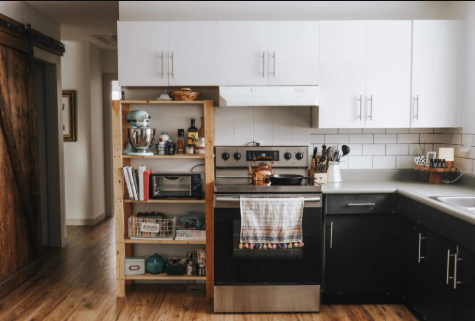
Open shelves filled with books. Kitchen benches holding small appliances. Cables. Decor items. Photos. Remote controls. It all adds up — not in volume, but in stimulation.
Your brain scans constantly. Every object competes for attention.
That low-level processing creates fatigue.
Even a tidy room can feel chaotic if every surface is busy.
Try this: Remove 30% of what’s visible on shelves and benches. Don’t reorganise it — temporarily remove it. If you don’t have the physical capacity to do it, hire a furniture removalist in Melbourne to help store it out of sight for a week. Notice how the room feels.
Less visual input usually equals more calm.
2. Furniture That’s Too Large Makes Rooms Feel Smaller
Modern furniture trends lean oversized — deep sofas, wide coffee tables, bulky entertainment units.
They look comfortable in showrooms.
In average homes, they compress space.
When walking paths narrow or furniture touches multiple walls, the room feels tighter than it is.
You don’t need new furniture. Sometimes you just need:
- Fewer pieces
- More breathing room between items
- Clear walkways
If you have to turn sideways to pass something, the room is telling you something.
3. Storage Isn’t Always the Solution
When a home feels cluttered, many people buy storage.
More baskets. More drawers. More cabinets.
But storage can mask clutter rather than reduce it.
If every drawer is full and every cupboard is packed, the house feels dense — even if it looks tidy.
Before adding storage, remove volume apply declutter tips and minimise your possessions.
Ask:
- When did I last use this?
- Would I buy it again today?
- If it disappeared, would I replace it?
Space improves faster when volume decreases.
See also: Ultimate Guide to Whole Home Power Resilience
4. Too Many Small Objects Create Mental Load
Small items create disproportionate visual weight.
Decorative pieces, stacked mail, multiple candles, scattered electronics — they fragment surfaces.
Surfaces need open space to feel calm.
Designers often leave 30–50% of a surface empty. That’s not accidental.
Try clearing one entire surface completely — a side table or bench. Leave it empty for 48 hours.
It will feel strange at first.
Then it will feel intentional.
5. Lighting Changes Everything
Poor lighting exaggerates clutter.
Overhead lighting alone creates shadows and harsh contrast. Dark corners make rooms feel heavy.
Layered lighting — lamps, floor lights, warm bulbs — softens edges and makes a space feel open.
Sometimes the room isn’t cluttered.
It’s just badly lit.
Switching from cool white to warm light can change the entire mood instantly.
6. Colour Density Impacts Perception
Rooms with many competing colours feel busier.
It’s not about painting everything white. It’s about limiting visual competition.
If your living room includes:
- Dark couch
- Patterned rug
- Bold artwork
- Colourful cushions
- Wooden shelves
- Black electronics
Your eye never rests.
Simplify one element. Swap patterned cushions for neutral ones. Remove one bold piece.
You don’t need minimalism. You need cohesion.
7. Digital Clutter Spills Into Physical Space
Laptops on tables. Chargers in every corner. Tablets. Headphones.
Modern homes double as offices.
The problem isn’t technology — it’s permanence.
If devices never leave shared spaces, those spaces never fully reset.
Create a charging zone. A small tray or drawer where devices “live” at night.
When surfaces aren’t tech parking lots, rooms feel more deliberate.
8. The “Reset Test”
If you’re unsure whether your home is cluttered or just visually noisy, try this:
Stand in your doorway and take a photo.
Photos remove emotional attachment. They show shape, density, and imbalance clearly.
You’ll often notice:
- Crowded corners
- Overloaded shelves
- Uneven spacing
Rebalance from there.
9. Why Homes Feel More Overwhelming in 2026
Homes today carry more roles than ever before:
- Office
- Gym
- School zone
- Entertainment space
- Storage hub
- Vintage projects like car & motorbike restorations
Multi-use spaces naturally accumulate items.
The key isn’t eliminating function — it’s zoning it.
Even a small basket for “work items” that gets put away at night can reset the room visually.
When spaces have boundaries, they feel calmer. If you haven’t worked on the vintage car or motorbike restoration project you’ve been meaning to work on, is it really going to get done. Why not find a motorbike transporter or wrecker who will pay you to move it for you.
10. The Fix Is Usually Subtraction
You don’t need a renovation.
You don’t need new furniture.
You don’t need 14 matching storage boxes.
You need space.
Remove one piece of furniture. Clear one shelf. Empty one surface. Store one group of decorative objects. Small subtractions create disproportionate relief.
Final Thought: Calm Is Created, Not Bought
Clutter isn’t just about how much you own. It’s about how much your eyes have to process.
The homes that feel calm usually aren’t empty.
They’re edited.
If your space feels heavy, try removing before rearranging.
Often, the simplest fix is giving your room – room to breathe.