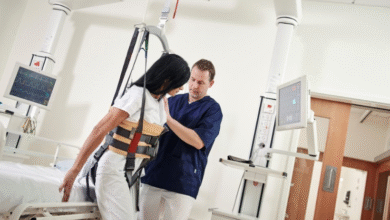
There is a stage in mobility that does not get talked about enough.
Not fully independent.
Not fully immobile.
Somewhere in the middle.
This is the space where many people live day to day. They can bear some weight. They can follow instructions. They might stand briefly. But transfers are tiring. Unsteady. Sometimes risky.
This is where the Standing Lifter quietly earns its place.
Not as a dramatic intervention. More as a bridge. A practical, steadying presence that supports movement without taking it over completely.
Why This Stage Gets Overlooked
Care conversations often jump between extremes.
Either someone is “fine,” or they “need a hoist.”
But real bodies do not work in neat categories. Strength fluctuates. Confidence dips. Fatigue builds. Progress is rarely linear.
The Standing Lifter sits in this in-between space. It supports partial weight-bearing. Encourages engagement. Reduces strain without removing the person from the movement itself.
That balance matters more than it sounds.
Standing Is Not Just About Legs
Standing is physical, yes. But it is also psychological.
Being upright changes perspective. It affects circulation. Digestion. Breathing. Even though people feel about themselves.
For many users, the Standing Lifter is not just a transfer tool. It is a way to remain involved in the act of standing, even when doing it alone is no longer safe.
That sense of participation can quietly support confidence. And dignity. And routine.
The Difference Between Helping and Taking Over
One of the most essential things a standing lifter does is reduce over-assistance.
When carers lift manually, they often compensate too much. Out of caution. Out of habit. Out of time pressure.
Over time, this can lead to deconditioning for the person being supported. And an injury for the carer.
A standing lifter redistributes effort. It supports the movement without replacing it. The person still pushes. Still stands. Still engages their muscles.
Just with less risk.
Carer Fatigue Is Part of the Equation
Manual handling injuries remain common in care environments. Especially during repeated transfers. Bed to chair. Chair to toilet. Over and over.
The Standing Lifter reduces strain on backs, shoulders, and wrists. It creates consistency. Predictability. Fewer awkward movements.
And when carers are less fatigued, care tends to feel calmer. More patient. More human.
That difference shows up quickly.
Home Environments Change the Conversation
In residential care, equipment is expected. In homes, it can feel intrusive at first.
People worry about space. Appearance. Complexity.
But once a standing lifter is set up correctly, many families find that daily routines become smoother. Transfers take less negotiation. Less rushing. Less physical stress.
The device becomes part of the environment rather than an interruption to it.
Training Matters More Than the Equipment
A standing lifter is only as effective as the way it is used.
Poor positioning. Incorrect sling use. Rushed transfers. These can reduce comfort and safety.
Proper training changes everything. It builds confidence for both users and support workers. It reduces hesitation. And it makes transfers feel predictable rather than stressful.
This is often where outcomes improve most, not from upgrading equipment, but from improving understanding.
See also: Small Daily Habits That Quietly Support Mental Health
Not Everyone Is a Match, And That Is Okay
Standing lifters are not suitable for everyone. And that is an integral part of the conversation.
People need some weight-bearing ability. Some trunk control. Some ability to follow cues.
Using a standing lifter when these conditions are not present can increase risk rather than reduce it.
Good assessments matter. So does revisiting them over time. Needs change—strength changes. What worked six months ago might not work now.
That is not failure. It is reality.
Short-Term Use Can Be Just as Valuable
Standing lifters are often associated with long-term support. But they can also play a role in recovery.
Post-surgery. After illness. During rehabilitation.
In these cases, the Standing Lifter provides temporary support while strength rebuilds. It reduces setbacks. Encourages safe movement. And it supports gradual independence.
Sometimes the goal is to stop using it eventually. And that is a success story too.
Small Design Details Make a Big Difference
Footplate grip. Knee support positioning. Handle height. Wheel stability.
These details affect comfort and safety more than people expect.
A well-matched standing lifter feels intuitive. It moves smoothly. It does not fight the user. Or the carer.
This is why trying equipment before committing matters. Real bodies behave differently than brochures suggest.
Dignity Lives in the Small Moments
Transfers happen many times a day. They shape routines. And relationships.
When transfers feel rushed or unsafe, dignity erodes quietly. When they feel supported and calm, dignity is preserved without anyone needing to talk about it.
The Standing Lifter contributes here in subtle ways. It reduces exposure. Minimises struggle. Supports a sense of control.
These things add up.
When It Is Time to Reassess
There may come a point when a standing lifter is no longer appropriate, when strength declines further. Or fatigue increases.
Recognising this early prevents incidents. It allows for smoother transitions to other supports.
The goal is not to cling to one solution. It is to adapt.
Final Thought
The Standing Lifter from CHS Healthcaredoes not shout for attention. It does not signal a dramatic change in care. It simply supports what is already there.
Some strength. Some movement. Some independence.
And in many Australian care settings, that quiet support makes the difference between struggling through transfers and moving through them with a bit more ease.
Sometimes, the most valuable equipment is the one that helps people stay involved in their own movement. Just enough. And no more than needed.